
You are not your stress. You are not your stress response. I am not my stress response! 🙂
Believing this is hard enough on a “normal” day… but especially difficult and important in times of uncertainty, periods of transition, loss, or change.
All of us experience our own version of a stress or trauma response — it’s part of being human. While our reactions may look different, we all respond in some way: sometimes it shows up outwardly, and other times it’s an internal storm no one else can see.
When stress or trauma becomes chronic, our nervous system can get “stuck,” which over time may affect our mental, physical, emotional, and even spiritual health. These patterns often become so familiar that they’re hard to recognize — what was once a temporary state can turn into a lasting trait.
- When we cannot fight the threat, we may end up fighting with those closest to us.
- When we cannot flee, we may escape into food, alcohol, TV, or constant plans to run away.
- When we cannot freeze long-term, we may shut down or withdraw emotionally.
- When we cannot people-please our way through, we may overextend ourselves caring for others, have difficulty with setting or holding boundaries, or grow resentful in our relationships.
There is power in naming these responses — it helps us step back and remember: this is my nervous system doing its job, not a flaw in me. And it can help us see where we might be stuck.
This month, I invite you to continue to practice a simple resiliency skill: noticing when your body is not in a stress response, but instead see if you can notice how it naturally resets.
- Pause once or twice each day.
- Notice any small signs of your body shifting back toward balance — a slower breath, a yawn, shoulders dropping, jaw loosening, or even a fleeting sense of ease.
- Take a moment to acknowledge it: “My body knows how to settle itself.”
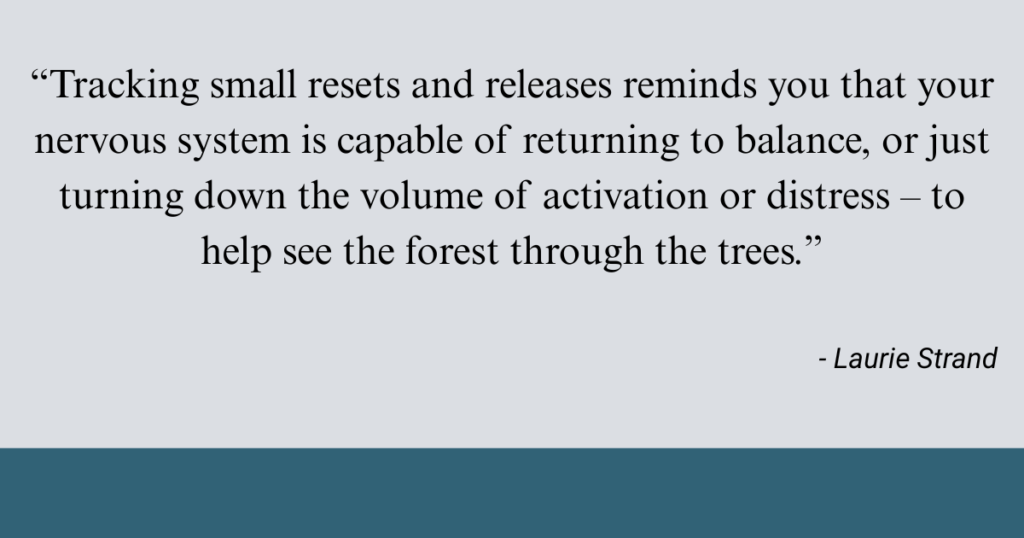
Tracking is a powerful skill used in many healing approaches — from the Community & Trauma Resiliency Models (CRM/TRM) to Somatic Experiencing, mindfulness, and beyond. Specifically tracking small resets and releases reminds you that your nervous system is capable of returning to balance, or just turning down the volume of activation or distress – to help see the forest through the trees.
Thank you for continuing to show up for your own healing and growth. If you’d like to go deeper with these tools, know that you are not alone — and support is here.
With care,
Laurie & the Resiliency Rising team