Spring is springing, people! I’m working in Boise for part of the week, and wow—things are starting to bud. I spotted my first tree blossoms on a sweet walk this morning, which got me thinking……Have you ever gone on a walk and gotten back to where you started without actually being on the walk? I mean, you know you’ve walked—but instead of being there, you hashed out your taxes, worried about a problem that hasn’t even become a problem yet, replayed a conversation that didn’t go well, fretted about _____’s life, and maybe even moved yourself to the cabin in the woods in retirement..… despite having 20 more years to work (is this just me?). Our brain has a remarkable way of defaulting to threat—potential or real—and making it all feel very real, in our mind and nervous system, through the stories and “movies” it plays.
And here’s the thing—we already know so much about what helps us feel better. We know alcohol doesn’t actually help, we know taking a few moments to breathe and sense ease and steadiness in the morning can make a difference, we know movement supports our mental health… and yet, we don’t always do those things. Insight abounds. Change… well, it’s another sweet beast.
When teaching with the Trauma Resource Institute through both the Community and Trauma Resiliency Models, we often talk about Dr. Richard Davidson and what he calls the “Four Brain Circuits.” In simple terms, these are circuits related to resilience (how quickly we recover), positive outlook (our ability to savor and see goodness), attention (our ability to stay present), and generosity (our capacity for connection and contribution).
What matters most here isn’t memorizing the circuits—it’s this: these circuits in the brain are trainable. (Can I get an AMEN for neuroplasticity!) And here’s the clincher – It’s about practice.
[Reminder: A resource is any person, place, thing, memory, or part of yourself that helps you feel calm, pleasant, peaceful, strong, or resilient.]
When we talk about the skill of resourcing, people sometimes say things like: “Why would I just be thinking about that?” or “This is really hard to access when I’m stressed,” or “But I’m not actually there, so why would I spend time focusing on it?” And often, both they—and their anxious systems—want to move on quickly.
When we talk about the skill of resourcing, people sometimes say things like: “Why would I just be thinking about that?” or “This is really hard to access when I’m stressed,” or “But I’m not actually there, so why would I spend time focusing on it?” And often, both they—and their anxious systems—want to move on quickly.
But pause for a moment—can you even begin to count how many hours, minutes, middle-of-the-night moments you’ve spent thinking about everything that might go wrong? Replaying, anticipating, problem-solving things that may or may not ever happen?
And when you do that—just notice—how does it feel in your chest? In your body? When you call to mind these real or perceived problems, your system responds as if they are happening right now. This is the why. Holy Toledo… we need to balance the scales—for the health of our nervous system, and for our minds.
And to that, I gently wonder—why is it that we so easily spend time thinking about things that haven’t even happened yet… or replay things that have happened in ways that make us feel worse? Thoughts that send our nervous system into a tizzy and keep us stuck in “what if…” loops?
Now, it’s very important to hear and support the worried parts of ourselves. And—it’s also true that we can support these parts by offering opportunities to sense into other truths.
Sometimes there is something to worry about. If that’s the case, make time to worry and problem solve. But much of the time, our brain is simply doing what it’s wired to do—scan for threat and try to protect us.
Resourcing is one way we begin to gently work with that system—not by forcing it to stop worrying, but by helping it experience something else.
When we bring to mind something that helps us feel even a little more calm, grounded, or connected—and we actually feel into that experience—we begin strengthening these pathways in the brain over time.
Not through insight. Through practice. (Oh the “P” word!)
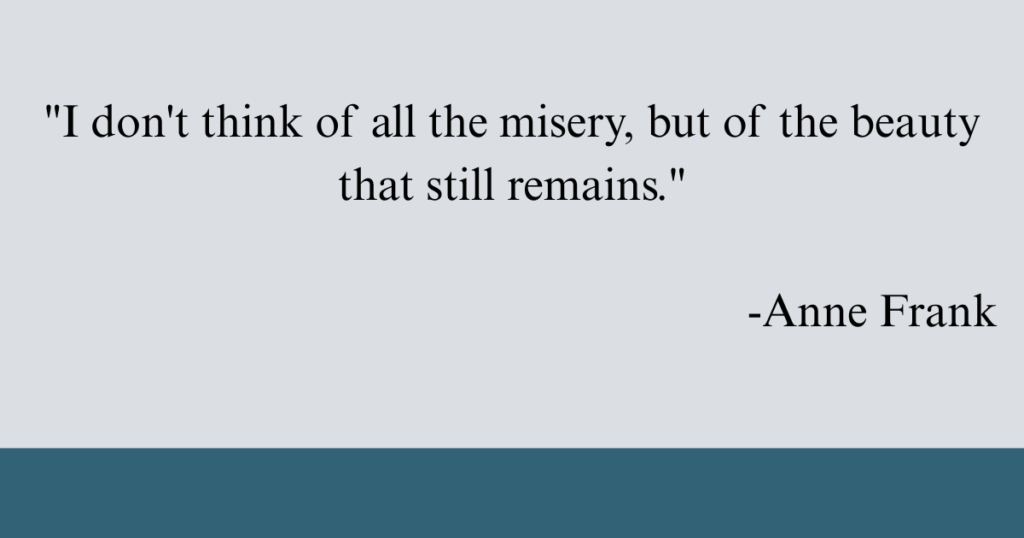
Practice that helps us notice more than just what’s wrong. Practice that helps balance the scales. Not to deny reality or avoid what’s hard—but to help us show up more steady, more present, and more able to take in what’s also true.
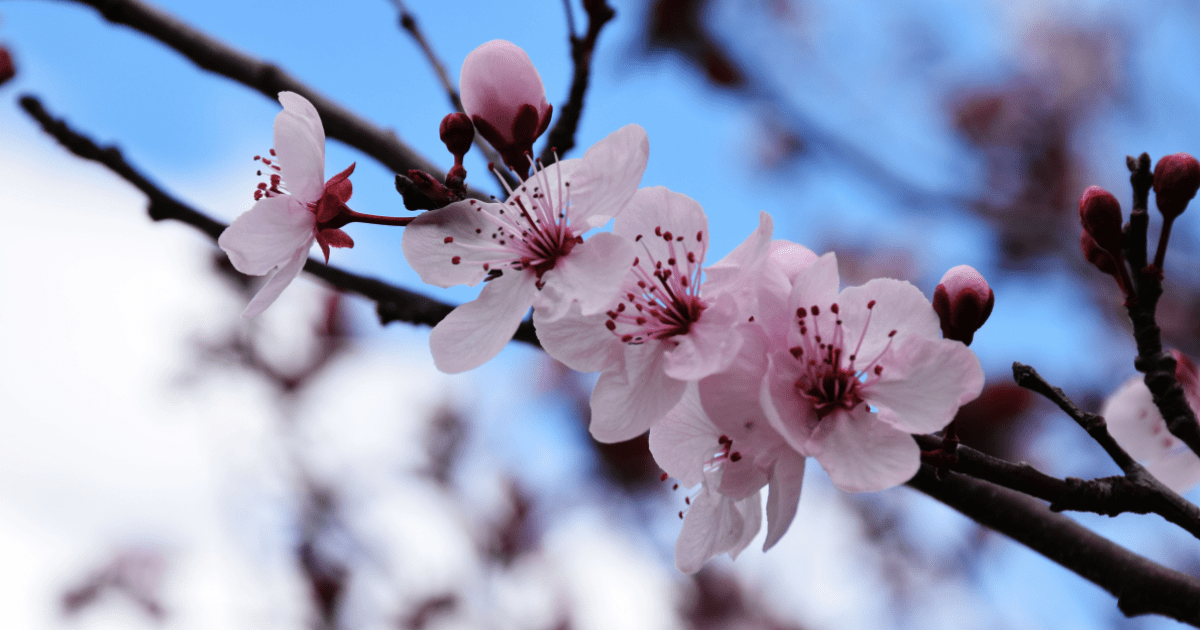
Like the cherry blossoms that were there the whole time… whether I noticed them or not. 🌸
And here’s the thing—when we do notice something like that, our mind will often try to move us along pretty quickly. Onto the next thought, the next plan, the next problem to solve.
But what if, just for a moment, we practiced and stayed?
What if we noticed the blossoms, really noticed them… the color, the shape, the way looking at their beauty landed in our body. Maybe even reached out and touched them, and taking a moment to track our nervous systems response, to actually sense into that experience for just a few extra seconds.
These tiny moments—of noticing what’s right in front of us and letting it land—are a form of resourcing. And over time, they help expand our capacity to hold more of what is true in our one precious life.
If you’d like a little support putting this into practice, I created a simple resource to help you expand a moment like this and build the skill over time.
With care,
Laurie